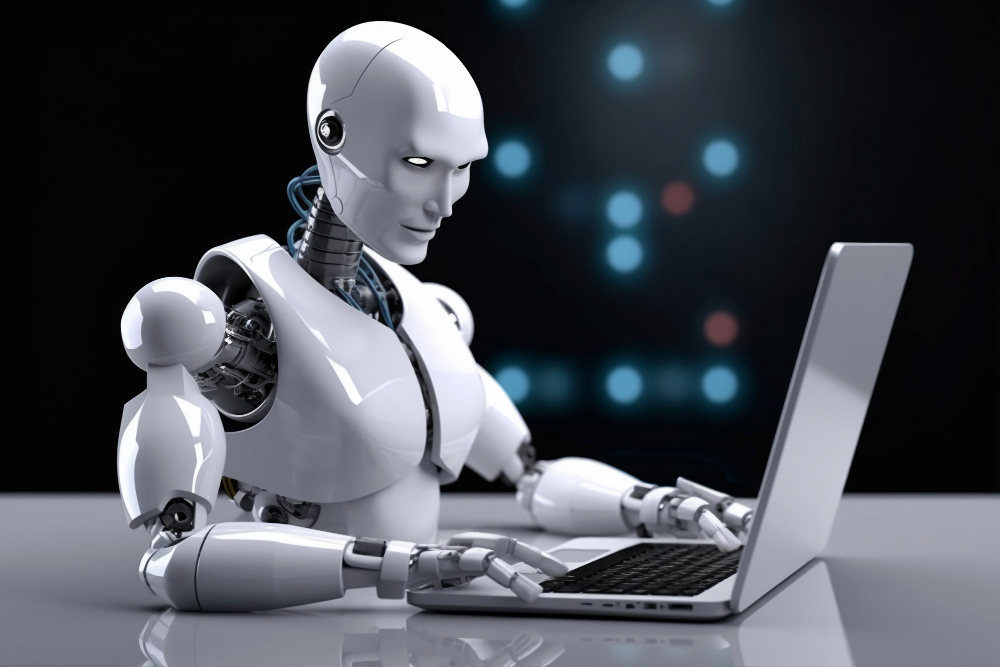
The rapid evolution of artificial intelligence has reshaped industries worldwide, but few sectors have experienced a shift as profound as content creation and creative production. Generative artificial intelligence, driven by complex deep learning models and natural language processing architectures, has transitioned from an experimental novelty into an indispensable creative co-pilot. Today, writers, visual artists, software developers, musicians, and marketing strategists utilize generative systems to brainstorm, draft, refine, and scale work at unprecedented speeds.
This technological revolution goes far beyond simple operational automation. Generative AI fundamentally alters the relationship between human ideation and execution. By lowering technical barriers and compressing project lifecycles, these tools expand access to creative output while simultaneously sparking critical discussions regarding artistic authenticity, intellectual property rights, and the future role of human expression in an automated world.
The Technological Engine Behind Generative Creativity
Understanding how generative artificial intelligence impacts creative industries requires examining the underlying computational engines powering these systems. Unlike traditional software that operates strictly on deterministic, rule-based logic, generative models learn complex statistical patterns from vast multi-modal datasets.
-
Large Language Models: Architectures trained on massive corpora of text learn grammar, contextual reasoning, domain expertise, and style nuances, enabling them to generate coherent essays, code bases, poetry, and technical documentation from natural language prompts.
-
Diffusion and Vector Models: Visual generation algorithms convert textual descriptions into high-resolution imagery, digital art, video sequences, and three-dimensional renders by progressively transforming random Gaussian noise into structured visual compositions.
-
Neural Audio Synthesizers: Audio generation systems process spectral wave patterns to compose original music tracks, emulate human vocal timbre across diverse languages, and generate realistic sound effects for digital media.
Transforming the Written Word and Digital Publishing
In written media, generative AI serves as a powerful accelerator across editorial pipelines. Authors, journalists, copywriters, and technical communicators rely on intelligent text models to streamline research, outline complex narratives, and draft foundational content.
Eliminating the Blank Page Problem
The initial stage of writing often presents the highest cognitive hurdle. Generative writing tools allow creators to bypass ideation blocks by instantly producing varied outlines, topic angles, tone variations, and conceptual frameworks. Instead of staring at an empty document, writers begin their process by evaluating, editing, and curating generated options.
Hyper-Personalization at Scale
Enterprise marketing organizations leverage generative systems to craft hyper-personalized messaging adapted to distinct audience segments. Large language models adjust reading complexity, emotional tone, and value propositions dynamically, allowing brands to launch thousands of targeted ad variations, email campaigns, and landing page copies in minutes.
Revolutionizing Visual Arts, Design, and Video Production
The visual domain has undergone a major paradigm shift. Concepts that previously required weeks of manual drafting, specialized 3D software expertise, or expensive photo shoots can now be visualized within seconds using text-to-image and text-to-video generators.
Democratizing Design Concepts and Storyboarding
Graphic designers, game developers, and film directors use generative visual tools for rapid conceptualization. During initial project phases, creative teams generate hundreds of mood boards, character designs, architectural concepts, and camera shot angles without consuming production budgets. This rapid iteration cycle accelerates client approval workflows and clarifies artistic direction before full-scale manufacturing or filming begins.
Streamlining Post-Production Workflows
Beyond standalone image creation, generative AI tools are deeply embedded within professional media editing suites. Automated systems handle complex visual effects tasks such as background removal, lighting adjustments, video frame interpolation, color grading, and object removal. This automation allows visual editors to dedicate more time to pacing, storytelling, and creative direction.
Redefining Music Composition and Audio Production
Audio production presents unique creative challenges due to its temporal structure and acoustic complexity. Generative AI models are opening new frontiers in musical composition, sound design, and voice synthesis.
-
Automated Music Composition: Content creators and game designers utilize generative audio platforms to create custom, royalty-free background scores tailored to precise emotional beats, visual cues, and duration constraints.
-
Advanced Vocal Synthesis: Voice synthesis models generate natural human speech for audiobooks, video game characters, and global localization, allowing voice tracks to be dubbed seamlessly into dozens of languages while preserving the original actor vocal cadence and emotional inflection.
-
Sound Effect Generation: Audio engineers use text-to-audio platforms to synthesize rare or impossible physical sound effects, expanding sound libraries for film, television, and virtual reality experiences.
The Emergence of the Human-AI Hybrid Creative Model
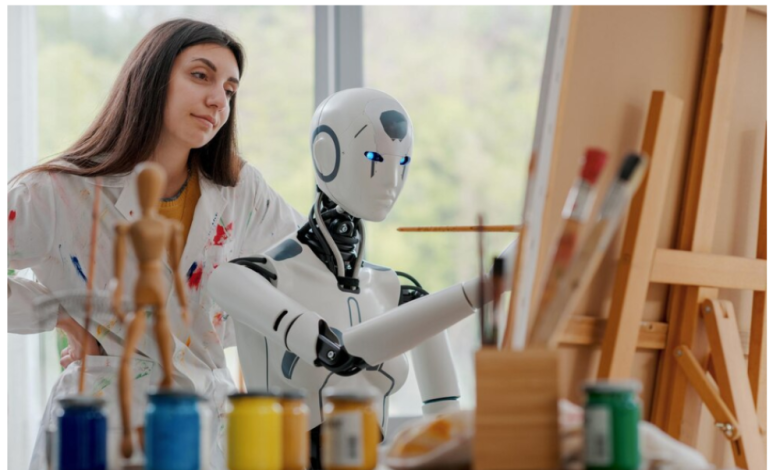
A common misconception surrounding generative AI is that it aims to replace human artists entirely. In professional environments, the most effective deployment of AI takes the form of a hybrid creative partnership, often termed direct human-in-the-loop collaboration.
In this operational model, the human creator transitions from a sole manual executor to a creative director. The human establishes intent, frames initial prompts, evaluates output quality, identifies stylistic inconsistencies, injects emotional nuance, and synthesizes fragments into a cohesive final product. Generative AI handles computational volume, rapid pattern generation, and technical formatting, allowing human creators to focus on high-level artistic vision, contextual relevance, and ethical oversight.
Navigating Legal, Ethical, and Authenticity Challenges
The integration of generative artificial intelligence into creative ecosystems introduces significant ethical, legal, and economic considerations that industry leaders and policymakers continue to address.
-
Intellectual Property and Copyright Ambiguity: Training generative models on vast public datasets containing copyrighted artworks, written literature, and proprietary code has triggered major legal disputes over fair use, data scraping rights, and artist compensation.
-
Ownership of AI-Generated Content: Legal frameworks in many jurisdictions maintain that pure AI-generated content lacking substantial human creative input cannot be copyrighted, creating commercial uncertainty for organizations publishing AI-assisted work.
-
Maintaining Originality and Cultural Homogenization: Because generative models rely on historical training data to predict statistical patterns, relying exclusively on AI output risks creating repetitive, derivative, and culturally homogenized media that lacks genuine artistic risk.
-
Mitigating Synthetic Misinformation: The ability to generate hyper-realistic fake imagery, cloned audio, and convincing synthetic text poses severe threats to news media integrity, public trust, and digital security.
Frequently Asked Questions
Can AI-generated content be copyrighted under current law?
Under current U.S. Copyright Office guidelines and international precedents, pure AI-generated content created without human creative control is not eligible for copyright protection. To secure copyright protection, a work must demonstrate sufficient human creative input, such as substantial original editing, complex artistic arrangement, or human-authored elements combined with AI tools.
Will generative AI replace human artists, writers, and designers?
Generative AI is transforming creative job descriptions rather than replacing human creativity entirely. While AI automates routine execution, manual formatting, and rapid drafting tasks, high-level creative direction, emotional resonance, strategic positioning, and authentic personal expression remain uniquely human capabilities. Professionals who master AI tools to augment their creativity will likely replace those who do not.
How do generative AI models handle artistic bias and representation?
Generative models reflect the historical data on which they are trained. If training data contains demographic imbalances, cultural stereotypes, or historical gaps, the generated output will mirror those biases. Developers actively use synthetic data balancing, alignment fine-tuning, and prompt filtering to reduce systemic bias and improve diverse representation in generated content.
How can content creators protect their original work from being scraped by AI models?
Content creators can protect their digital work by applying technical metadata tags, configuring site robots.txt files to block known AI data crawlers, using digital watermarking techniques, deploying anti-scraping software solutions, and uploading assets to platforms that enforce strict terms of service regarding AI training usage.
What is prompt engineering, and why is it important for generative tools?
Prompt engineering is the strategic practice of structuring, refining, and contextualizing natural language instructions provided to generative AI models. Precise prompt engineering allows creators to control tone, style, camera angles, lighting conditions, formatting specifications, and domain accuracy, ensuring the AI output aligns closely with the user intended creative outcome.
How are educational institutions adapting to generative AI in writing and media studies?
Educational institutions are shifting away from banning AI toward integrating AI literacy into curricula. Educators focus on teaching students how to critically evaluate AI-generated information, use generative tools ethically as research assistants, understand algorithmic bias, and develop high-order critical thinking, original thesis construction, and hands-on editing skills.
What tools exist to detect whether a piece of content was generated by AI?
Numerous software detection platforms analyze structural text randomness, token predictability, metadata signatures, and visual pixel artifacts to determine the probability of AI generation. However, because generative models continuously evolve to mimic human variance more accurately, detection tools are not entirely foolproof and are best used as advisory indicators alongside human editorial review.