The Rise of Artificial Intelligence: Transforming the Present and Shaping the Future

Introduction: The Dawn of a New Era
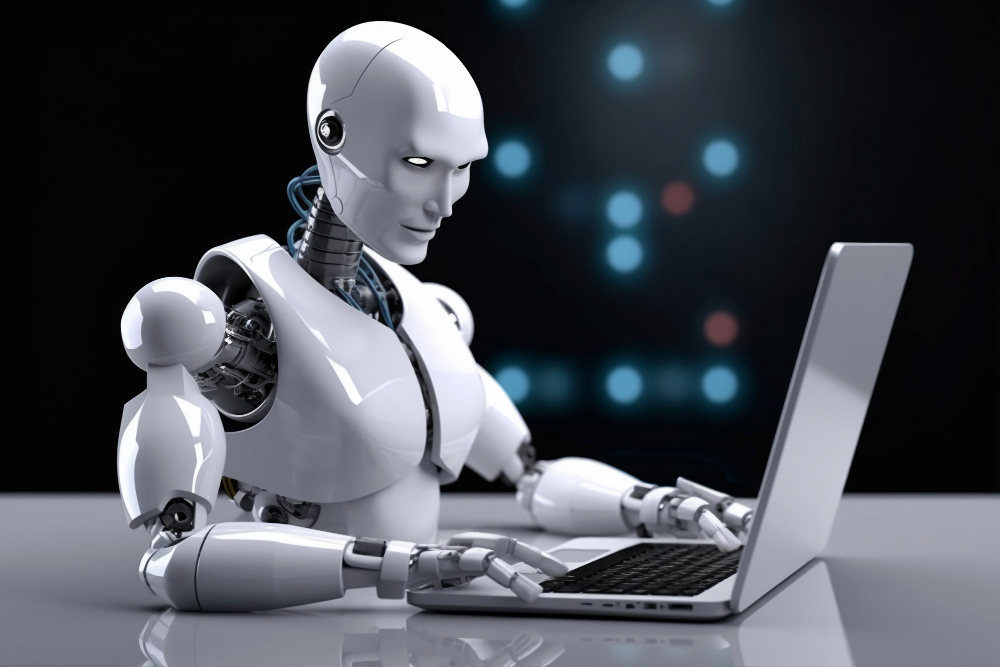
Artificial Intelligence (AI) has evolved from a theoretical concept to an undeniable force driving innovation across the globe. Once confined to the imaginations of science fiction writers, AI now permeates every facet of modern life—from voice assistants and smart recommendations to medical diagnostics and autonomous vehicles. As we stand at the crossroads of the digital revolution, it is imperative to understand the scope, potential, and ethical implications of this transformative technology.
Understanding Artificial Intelligence
Artificial Intelligence refers to the capability of machines to mimic human cognitive functions such as learning, problem-solving, reasoning, and decision-making. At its core, AI is powered by algorithms that allow systems to recognize patterns in data, improve through experience, and perform tasks with minimal human intervention.
AI can be broadly categorized into three types:
-
Narrow AI (Weak AI): Designed to perform a single task, such as facial recognition or internet search engines.
-
General AI (Strong AI): Hypothetical systems that possess human-level intelligence and can perform any intellectual task a human can do.
-
Superintelligent AI: A futuristic concept where machines surpass human intelligence in virtually all fields.
While we currently operate in the realm of Narrow AI, developments in machine learning and neural networks are gradually nudging us closer to more generalized applications.
How AI Is Transforming Industries
The influence of artificial intelligence spans a wide spectrum of industries, revolutionizing operations and unlocking new capabilities.
1. Healthcare
AI-driven diagnostics have improved the accuracy and speed of identifying diseases. Algorithms can now analyze medical imaging with precision rivaling that of expert radiologists. AI is also pivotal in drug discovery, reducing the time and cost traditionally associated with research and development.
2. Finance
Banks and financial institutions use AI for fraud detection, algorithmic trading, credit scoring, and customer service automation. Predictive analytics enables firms to make smarter investment decisions and personalize financial advice.
3. Retail and E-Commerce
AI curates personalized shopping experiences by analyzing user behavior and preferences. Chatbots provide real-time customer support, while AI-powered logistics streamline inventory management and delivery.
4. Manufacturing
In factories, AI optimizes supply chains, predicts equipment failures, and facilitates quality control. Robotics integrated with AI enhances precision and productivity on the assembly line.
5. Transportation
Self-driving vehicles are perhaps the most talked-about advancement in AI. Companies like Tesla, Waymo, and Uber are actively testing autonomous systems aimed at reducing accidents and increasing mobility.
The Ethical and Social Dilemmas
As powerful as AI is, it also presents a set of profound ethical and societal challenges that must not be ignored.
Job Displacement
Automation threatens to replace a wide array of jobs, particularly in manufacturing, data entry, and customer service. While new roles will emerge, the transition may disproportionately impact low-skill workers, leading to economic disparity.
Bias and Fairness
AI systems are only as good as the data they’re trained on. If that data contains historical bias, the AI will likely replicate it. This is particularly concerning in sectors like hiring, law enforcement, and lending.
Privacy and Surveillance
The integration of AI with facial recognition and data analytics has enabled unprecedented levels of surveillance. This raises significant concerns about privacy, civil liberties, and the potential for authoritarian misuse.
Autonomy and Accountability
As AI systems become more autonomous, determining responsibility in case of errors or failures becomes complex. Who is accountable when a self-driving car causes an accident—the manufacturer, the software developer, or the vehicle owner?
The Path Forward: Building Ethical and Trustworthy AI
To harness AI’s potential responsibly, a multi-stakeholder approach is required—one that includes governments, corporations, academia, and civil society.
-
Transparent Algorithms: Developers must strive for transparency in AI decision-making processes, ensuring users understand how and why decisions are made.
-
Inclusive Data Sets: Using diverse and representative data can help reduce algorithmic bias and promote fairness.
-
Strong Regulation: Governments need to implement robust frameworks that regulate the use of AI, protecting individual rights and public interests.
-
Public Awareness: Education and awareness campaigns can empower individuals to better understand AI and its implications on their lives.
The Future of Artificial Intelligence
The future of AI is both thrilling and unpredictable. As quantum computing, brain-computer interfaces, and advanced robotics converge with AI, we may witness breakthroughs that redefine what it means to be human.
Some potential future trends include:
-
Human-AI Collaboration: Rather than replacing humans, future AI systems may serve as cognitive partners, augmenting human intelligence.
-
AI in Climate Action: AI can play a vital role in monitoring environmental changes, optimizing energy use, and modeling climate interventions.
-
Universal Basic Income (UBI): As AI-driven automation expands, governments may consider UBI to ensure social stability and economic security.
Conclusion: Embracing the AI Revolution with Wisdom
Artificial Intelligence holds immense promise and peril. It is a tool—one that can build or break depending on how wisely it is wielded. The choices we make today will shape not only the future of technology but also the fabric of our society. By fostering ethical innovation, encouraging inclusive dialogue, and setting thoughtful regulations, we can steer AI toward a future that benefits all of humanity.
In embracing AI, we must not lose sight of the human values that define us—empathy, fairness, creativity, and curiosity. The future, powered by intelligence both artificial and human, can be a masterpiece of progress if we paint it with care.