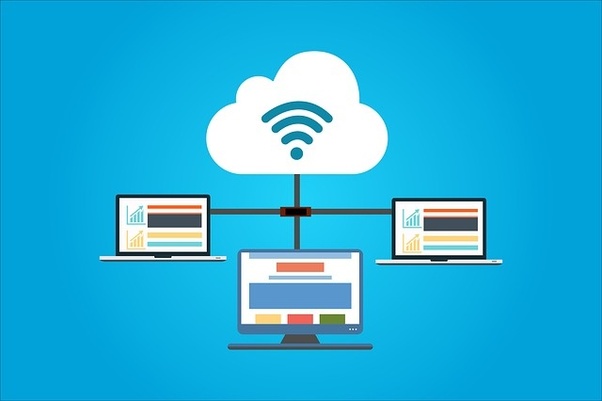
Introduction: The Invisible Backbone of Modern Connectivity
In the hyper-connected age of cloud computing and real-time digital experiences, web services operate quietly in the background, making everything from online shopping to mobile banking possible. While most users interact with sleek interfaces and responsive applications, it’s web services that drive the seamless communication between disparate systems, applications, and servers. Understanding how web services function—and why they matter—is essential for grasping the technical foundation of today’s digital ecosystem.
What Is a Web Service?
A web service is a standardized method of communication between two electronic devices over a network. It enables applications—often written in different programming languages and running on different operating systems—to exchange data and perform operations remotely. By using open protocols and internet standards, web services allow for interoperability in a way that’s efficient, scalable, and secure.
In simpler terms, a web service acts like a translator and courier between two systems, ensuring that a request is understood and the appropriate response is delivered, regardless of how the systems are built.
Key Characteristics of Web Services
To qualify as a web service, a system typically must exhibit the following characteristics:
-
Platform Independence: Web services can interact across different platforms and languages.
-
Interoperability: They use standardized protocols, such as HTTP and XML, to ensure smooth communication.
-
Loose Coupling: Services interact with minimal dependency on one another, making them flexible and easy to integrate.
-
Statelessness: Most web services do not retain client information between requests, enhancing scalability and simplicity.
-
Reusability: Web services can be reused across different applications and projects.
Types of Web Services
Over time, different models of web services have emerged to suit varying levels of complexity and use cases.
1. SOAP (Simple Object Access Protocol)
SOAP is a protocol that defines a very structured format for messaging. It is highly standardized, secure, and extensible, making it ideal for enterprise-level applications that require strict compliance and formal contract agreements.
Advantages:
-
Strong support for security standards
-
Built-in error handling
-
Ideal for complex, enterprise-grade systems
2. REST (Representational State Transfer)
REST is an architectural style that uses standard HTTP methods like GET, POST, PUT, and DELETE. RESTful services are lightweight, easy to understand, and faster to integrate, making them popular for modern web and mobile applications.
Advantages:
-
Simple and easy to use
-
Uses JSON or XML, with a preference for JSON due to its light payload
-
Scales well with web infrastructure
3. GraphQL
Developed by Facebook, GraphQL allows clients to request exactly the data they need, reducing over-fetching and under-fetching common in REST APIs. It’s ideal for applications with complex data requirements.
Advantages:
-
Precise data retrieval
-
Efficient for complex relational data
-
Strongly typed schema
How Web Services Work
At its core, a web service workflow follows this structure:
-
Request: A client sends a request to a server through a defined endpoint using HTTP or another protocol.
-
Processing: The server processes the request, accesses necessary resources or data, and prepares a response.
-
Response: The server sends back a response, typically in XML or JSON format, containing the data or result of the requested action.
For example, when you use a weather app to check the forecast, your app sends a request to a weather web service, which processes the query and returns the temperature, humidity, and other details in a format your app can display.
Real-World Applications of Web Services
Web services play a foundational role across a wide array of industries and technologies:
-
E-commerce: Payment gateways, product catalogs, and shipping integrations rely on APIs to function smoothly.
-
Finance: Banking apps interact with servers using web services to fetch account details and process transactions securely.
-
Healthcare: Electronic health record systems use web services for patient data exchange across platforms.
-
Travel and Hospitality: Online booking systems use APIs to pull flight data, hotel availability, and car rentals in real-time.
-
Social Media: Platforms use web services for user authentication, content sharing, and third-party app integration.
Benefits of Web Services
The growing reliance on web services is no coincidence. They offer substantial advantages for businesses, developers, and end users.
-
Scalability: Modular architecture allows services to grow independently.
-
Flexibility: Developers can integrate different applications regardless of language or platform.
-
Cost Efficiency: Services can be reused across multiple projects, reducing development time.
-
Faster Time-to-Market: APIs enable quicker deployment of new features and integrations.
-
Global Access: Services can be hosted on the cloud and accessed from anywhere in the world.
Challenges and Considerations
Despite their advantages, implementing and managing web services comes with its share of challenges:
-
Security Risks: Improperly configured web services are vulnerable to attacks such as man-in-the-middle, injection, and data breaches.
-
Version Control: Updating services without breaking existing integrations requires robust versioning strategies.
-
Performance Bottlenecks: High traffic and poor optimization can lead to latency or service downtime.
-
Complexity in Error Handling: Distributed systems often make it harder to diagnose and correct failures.
Best practices such as encryption (SSL/TLS), authentication (OAuth2), load balancing, and detailed logging can help mitigate these issues.
The Future of Web Services
As digital transformation continues, the role of web services is set to grow even further. Trends shaping the future include:
-
Serverless Architectures: Abstracting server management while allowing developers to focus on code and logic.
-
Microservices: Building applications as a suite of loosely connected services, each handling a specific function.
-
Edge Computing: Moving services closer to the user for faster response times and better performance.
-
AI Integration: Services enhanced with machine learning to deliver smarter, context-aware responses.
Web services are also central to the rise of “composable businesses”—organizations that use plug-and-play technologies to adapt rapidly to market changes.
Conclusion: The Unsung Hero of Digital Innovation
Though often hidden beneath user-friendly interfaces and sleek front-ends, web services are the engine driving today’s internet experience. They enable diverse systems to communicate effortlessly, power real-time applications, and unlock the true potential of cloud computing and cross-platform functionality. In a world increasingly reliant on agility, integration, and instant access, understanding web services isn’t just a technical necessity—it’s a strategic imperative. As technology continues to evolve, these digital frameworks will remain at the heart of innovation, quietly enabling the seamless digital experiences we now consider essential.